
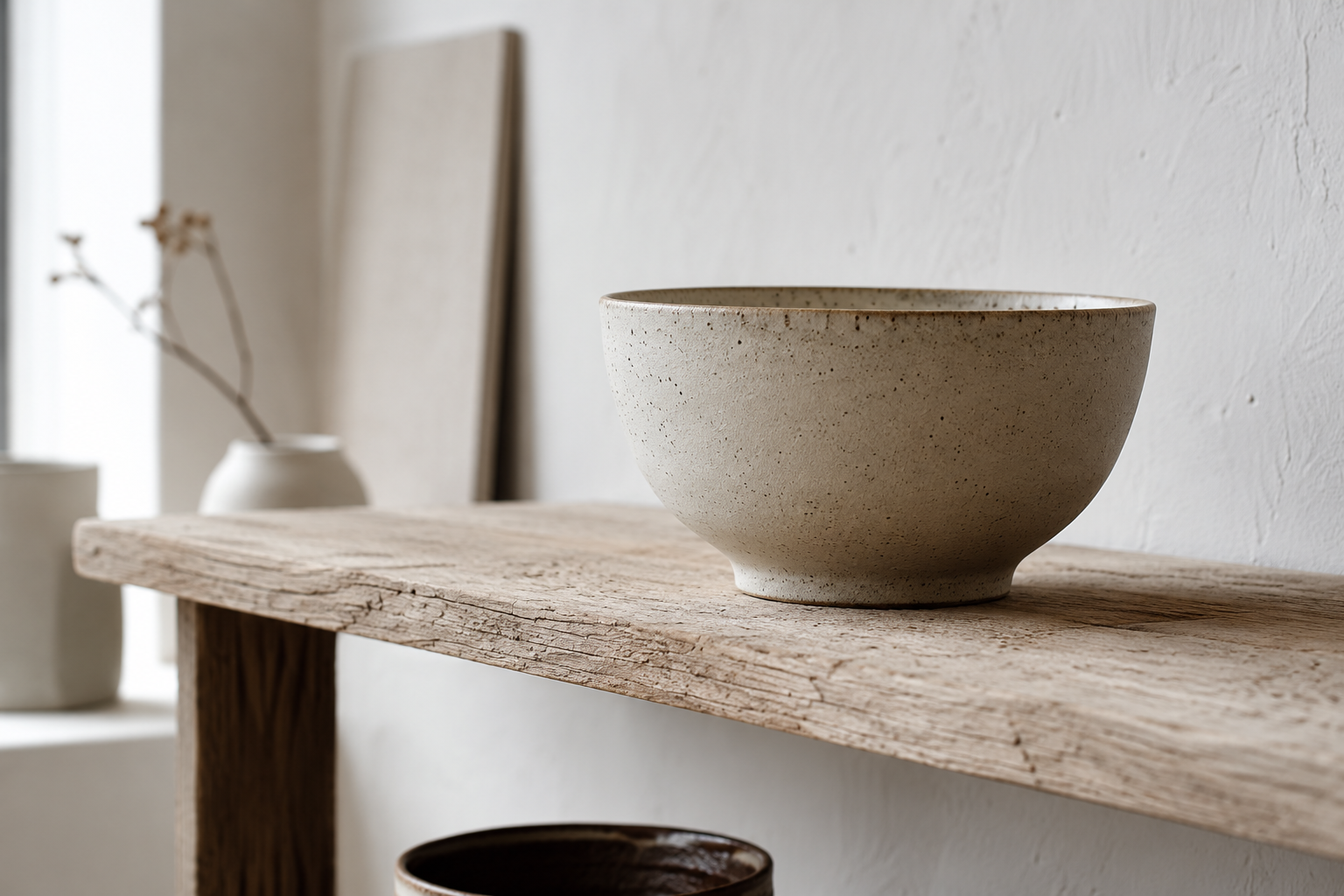
For decades, British design existed in the shadow of Italian elegance and Scandinavian minimalism. The assumption was that Britain did engineering and eccentricity but not style — not in the sleek, purposeful way that Milan or Copenhagen seemed to manage effortlessly. That assumption is now thoroughly outdated.
Restraint as a Design Language
The shift didn't happen overnight, and it certainly wasn't loud. What's emerged in British design studios over the past five years is a quiet confidence — an approach that favours material honesty over surface decoration, and longevity over novelty. You see it in furniture, in architecture, in the small independent studios producing homeware that's designed to last a generation rather than a season.
This isn't minimalism for its own sake. It's a conscious rejection of disposability, rooted in a very British understanding that the best things often don't draw attention to themselves. A well-made chair doesn't need to shout about its craftsmanship. The craftsmanship should be evident in the sitting.
The Makers Behind the Movement
Much of this work is happening outside London. Studios in Margate, Bristol, and Sheffield are producing designs that rival anything coming out of the capital, often with more interesting material choices. There's a ceramicist in Frome whose glazes have become internationally collected. A furniture maker in Hebden Bridge whose oak tables have a two-year waiting list.
What connects these makers is a shared belief that design should serve life rather than decorate it. Their work tends to be understated, tactile, and made with materials sourced as locally as possible. It's not anti-technology — many use digital fabrication alongside traditional hand skills — but it prioritises the human relationship with objects.
Why Now
Several forces converged. The sustainability conversation pushed designers to think about material cycles. The pandemic gave people a renewed appreciation for their domestic environments. And a generation of graduates emerged from British design schools with a deep literacy in both digital tools and hand processes, comfortable moving between the two.
There's also something cultural at play. Britain's design identity has always been shaped by making do — by improvisation and adaptation rather than grand statements. That instinct now looks prescient in a world grappling with resource constraints and questioning the purpose of endless consumption.
What Comes Next
The most interesting British design in 2026 doesn't look like a movement. It looks like a hundred small studios making thoughtful choices. No manifesto, no shared aesthetic, just a collective drift toward meaning over spectacle. If that sounds very British, it probably is.