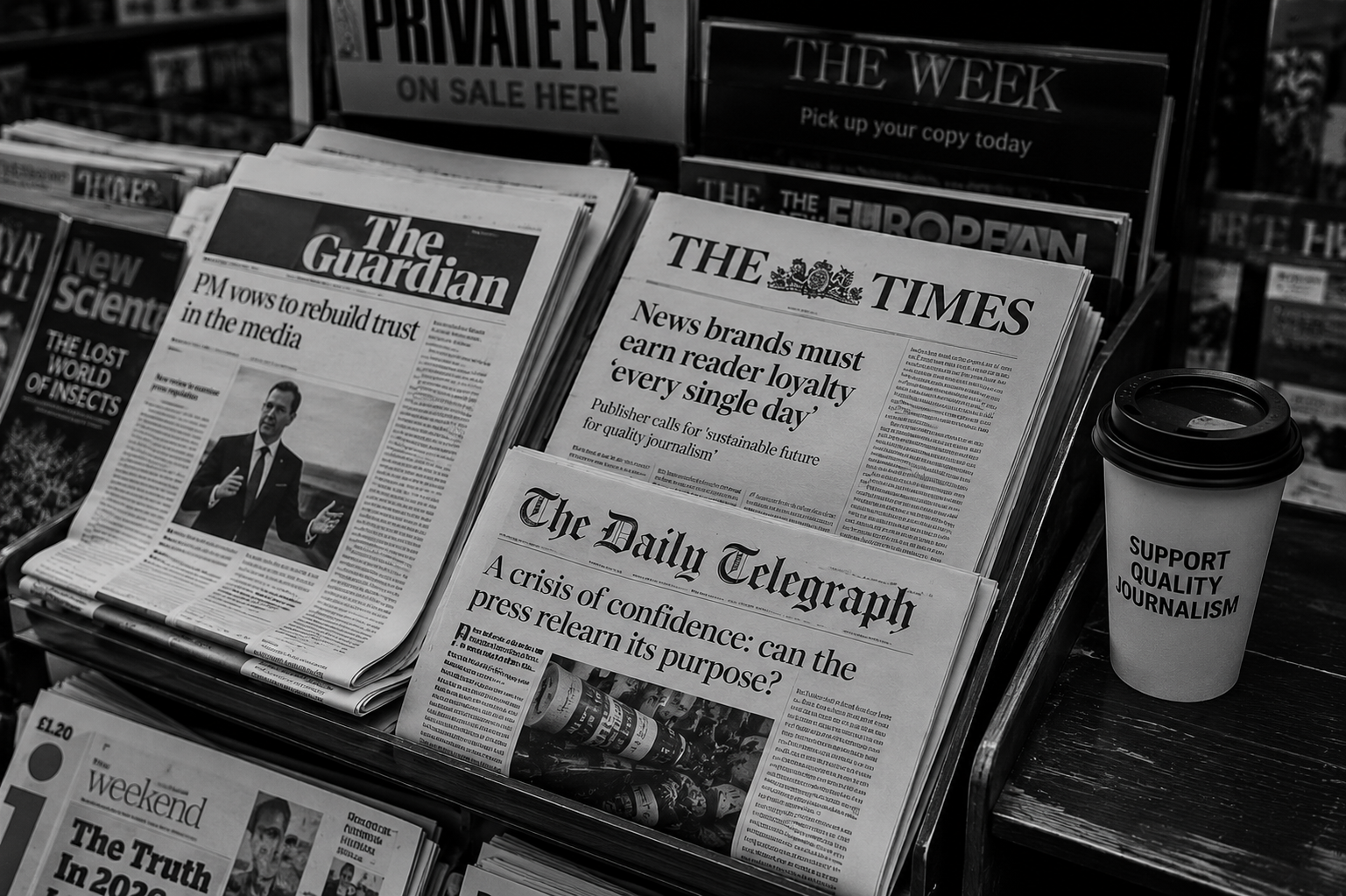
British journalism has a reputation problem, and it knows it. Trust in the press sits at historic lows. National newspapers have shed staff at an alarming rate. Local papers — once the backbone of accountability journalism — have disappeared from entire regions. And yet, amid the wreckage, something new is growing. Whether it's enough to replace what's been lost is the question that haunts the industry.
The Collapse of the Old Model
The business model that sustained British journalism for over a century — advertising revenue subsidising editorial — collapsed faster than anyone predicted. Digital advertising went to Google and Facebook. Print circulation fell off a cliff. The result was a brutal decade of redundancies, closures, and the steady erosion of the journalism that held powerful institutions to account.
The numbers are stark. According to Press Gazette, which tracks the health of the UK media industry, the number of frontline reporters in Britain has fallen by roughly half since 2005. Entire towns now lack a single journalist covering their local council. The democratic implications are profound and largely unaddressed.
The Newsletter Revolution
Into this gap has stepped a new generation of independent journalists. Platforms like Substack and Ghost have enabled individual reporters and commentators to build direct relationships with paying readers. Some of the best journalism in Britain in 2026 isn't published by newspapers at all — it's arriving in inboxes, funded by subscriptions of five or ten pounds a month.
The quality varies enormously. For every thoughtful independent newsletter, there are dozens peddling opinion as fact. But the best of them — the investigative reporters, the specialist correspondents, the local journalists who refused to stop covering their communities — are producing work that rivals anything from the legacy outlets.
The BBC Question
The BBC remains Britain's most trusted news source, but it faces pressures from every direction. The licence fee model is under constant political attack. Accusations of bias come from both left and right — which the corporation takes as evidence of impartiality, though critics see it as evidence of timidity. The question isn't whether the BBC will survive, but what form it will take in a decade's time.
What the BBC still does better than almost anyone is breadth. No commercial outlet can afford to cover the range of stories — from local council meetings to international crises — that the BBC manages. Lose that, and you lose something that no collection of newsletters and podcasts can replace.
What Survives
British journalism in 2026 is smaller, scrappier, and more fragmented than it was twenty years ago. But it hasn't disappeared. The instinct to investigate, to question, to hold power accountable — that survives, even when the institutions that once housed it are crumbling. The challenge now is building sustainable structures around that instinct before the expertise is lost entirely.