
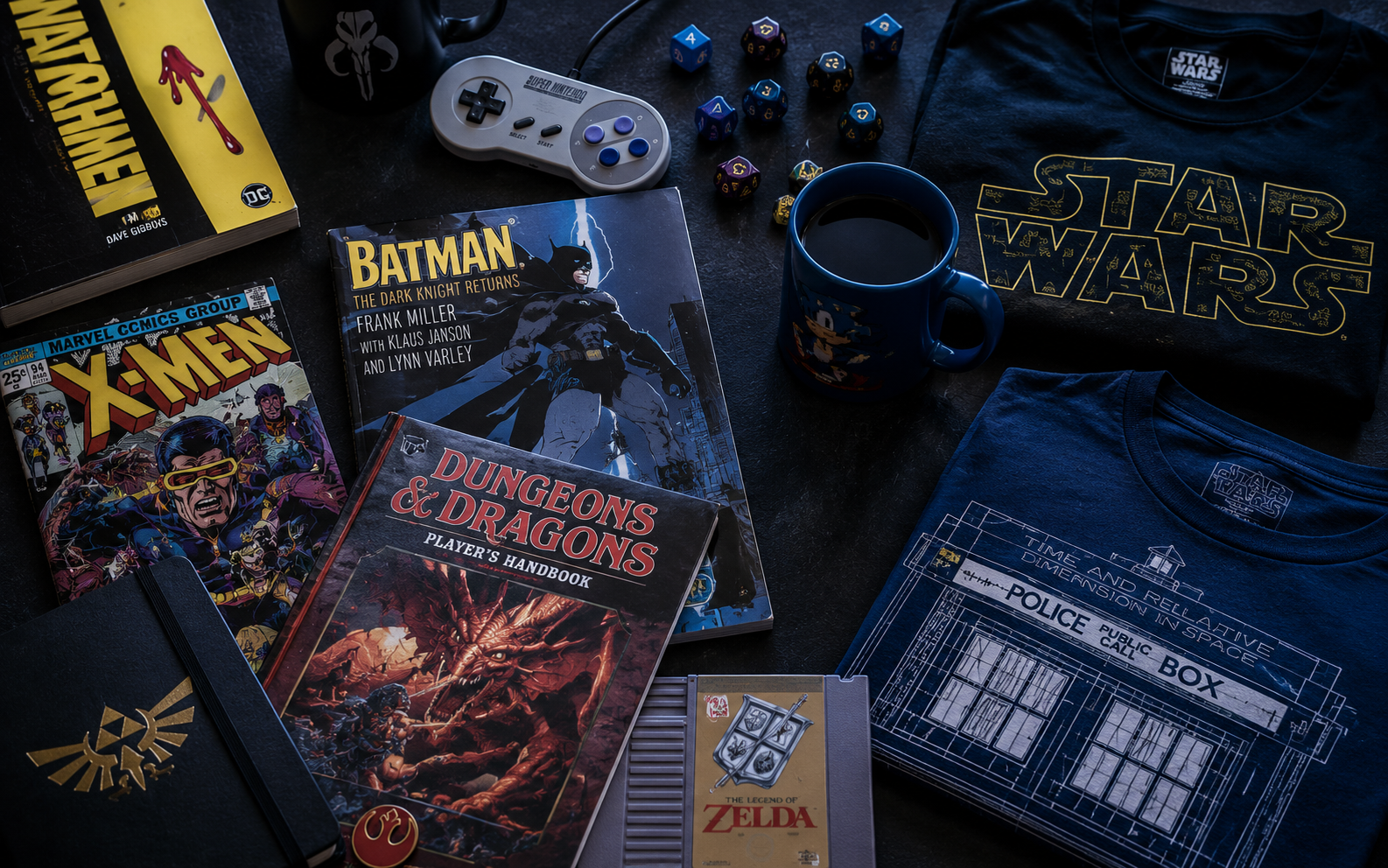
Somewhere around the turn of the last decade, something shifted in British culture. The things that had once marked you out for ridicule in the school playground — an obsessive knowledge of science fiction, an enthusiasm for tabletop games, a wardrobe built around graphic tees — became not just acceptable but aspirational. Geek, in Britain, had become cool.
The Long Road from the Margins
British geek culture has deep roots. The country that produced Douglas Adams, Terry Pratchett, and Doctor Who has always had a rich seam of intelligent, slightly obsessive fandom. But for decades, that fandom existed in a cultural ghetto — tolerated, occasionally celebrated, but never quite mainstream.
The transformation began with the internet. Online communities gave British geeks a way to find each other and organise. Comic conventions, once small affairs in draughty hotel function rooms, grew into massive events drawing tens of thousands. By the mid-2010s, London Comic Con was rivalling anything in San Diego.
The Fashion Crossover
Nothing signals a cultural shift quite like fashion. When graphic tees featuring obscure video game references started appearing in high-street shops, the crossover was complete. It wasn't just that geeks were wearing geek clothing — it was that everyone was. The aesthetic had transcended its origins.
The graphic tee market in Britain exploded. Independent retailers like Geek T-Shirts built loyal followings by offering designs that spoke to genuine fan knowledge rather than generic pop-culture references. The difference mattered — wearing a shirt that referenced an obscure 1980s ZX Spectrum game was a signal to those who understood, and simply a nice design to those who didn't.
Why Britain Embraced It
There's something particularly British about the geek identity. The enthusiasm tempered by self-deprecation. The deep knowledge worn lightly. The willingness to care intensely about something while pretending you don't. These are fundamentally British qualities, and geek culture provided a natural home for them.
Britain's comedy tradition helped too. Shows like The IT Crowd and later Taskmaster made intelligence and eccentricity entertaining to mass audiences. Being clever and a bit odd wasn't just okay — it was the entire premise of the nation's favourite entertainment.
Beyond the Label
In 2026, the term geek has almost lost its utility as a descriptor. When everyone plays video games, when superhero films are the dominant form of cinema, when coding is taught in primary schools — what does geek even mean anymore? The identity has dissolved into the mainstream so completely that the distinction between geek and non-geek is largely meaningless. Perhaps that was always the point. The geeks didn't change to fit the culture. The culture changed to fit the geeks.